Many people who consider installing a solar power system, also consider what it would take to not have to rely on Eskom at all.
Saying goodbye to Eskom is a big step. It implies that the homeowner or business must be completely self sufficient at all times.
In this regard there are many things to consider.
The Solar Panel Design.
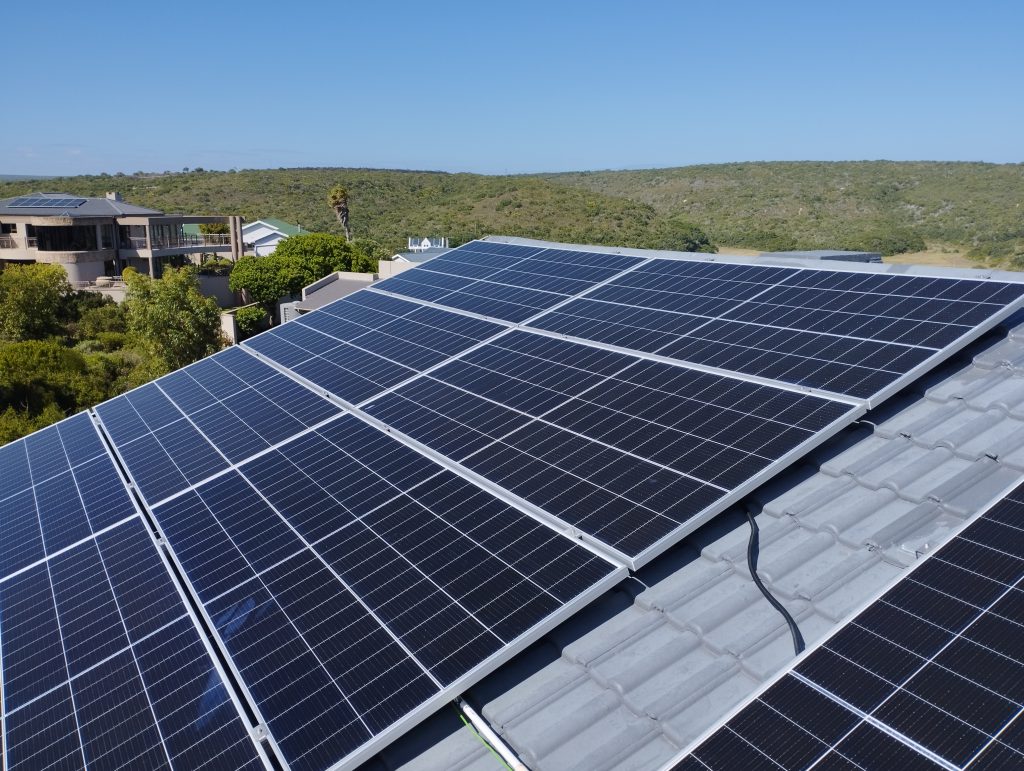
A solar panel will produce between 10% and 25% of it’s rated capacity on a cloudy day.
If for example you require 20kWh / day to run your home. In order to provide the required energy on a cloudy day, you may be required to install up to 30kWp or 60 x 550W panels. This would be completely out of the budget of the average home owner, exceed the capacity of the inverter, and in most cases there would not be nearly enough space.
The solar panel design is therefore based on the average energy production in areas where winter and summer are more or less the same, or the average winter production in areas where winter has lower energy production than summer. In South Africa, areas with cloudless winters, and rainy summers, e.g. Gauteng province, have more or less the same energy production in winter and summer. In the Western Cape region, there is a dramatic difference between winter and summer, and here the design would be based on the production in the winter months.
For those who are seriously considering removing reliance on Eskom, overdesigning the panels, and installing to the maximum that the inverter can accept is worth considering. At this moment in time, the price of solar panels is very low.
So then the question remains, how does one cope with those days that are fully overcast and raining, when production can drop to 10%.
Battery Design
In homes that remain connected to Eskom, and therefore have the grid to re-charge batteries, the battery design is focused on desired level of self-consumption, and more importantly, load shedding.
When considering moving away from Eskom entirely, the battery storage design needs to factor in; The overall daily energy usage, the time of day when most energy is used, and allowance for over-cast days.
The overall daily energy use is determined by the appliances. It may be worth investing in demand side reduction prior to installing the solar system. Examples of demand side reduction include; Replacing any incandescent or halogen lights with LED. Installing a solar geyser. Replacing the stove with gas. Buying lower energy appliances e.g. Air-Fryer, induction cooker, etc.
The time of day that most energy is used is important. If your home is very busy during the day-time hours, with night time dedicated to TV watching, then less storage may be required. If you cook at night using electricity, then greater storage is required.

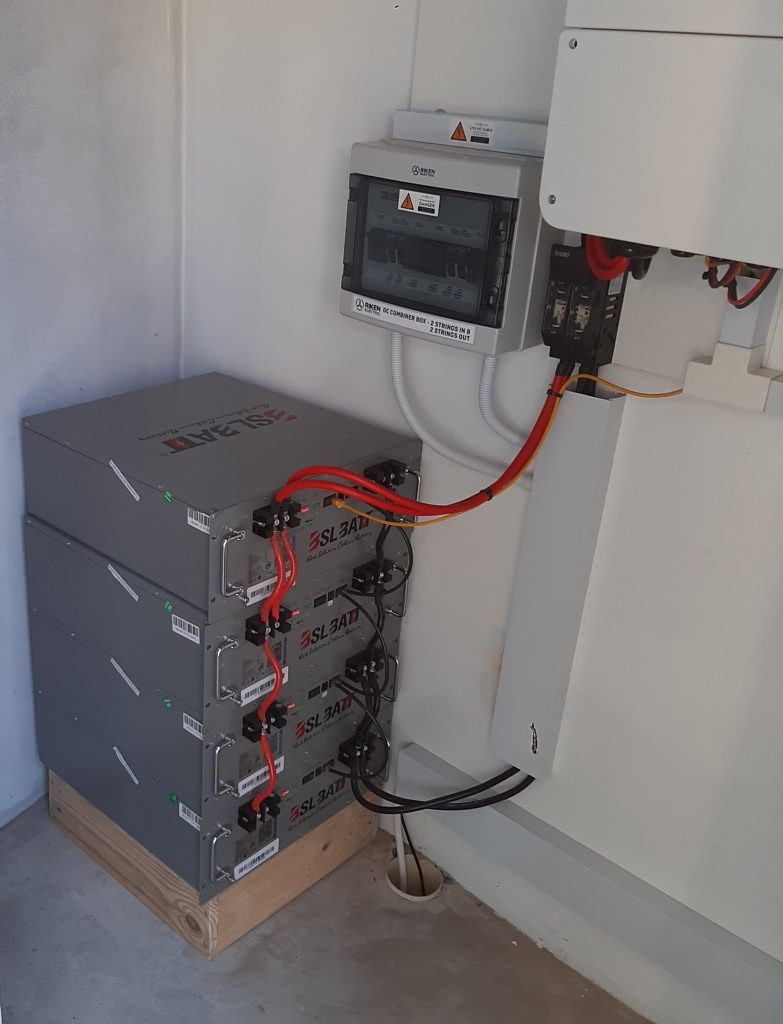
Allowance for over-cast days would mean that the battery storage design would ensure that there is enough left over to get the home through most of a cloudy day.
There are however cases when it is cloudy for many days in a row. If you really want to be self reliant, then there needs to be some backup, that takes the place of the grid.
The Back-Up Design
In the inevitable case that there is inclement weather for days on end, the solar panels will not be able to supply the energy demand as they are limited to 10-20% of their rated capacity. The battery storage will become depleted, and at this moment it is too expensive to install enough battery storage for several days requirements.

The most cost effective back-up becomes a generator.
Generators are reasonably inexpensive to purchace, but very expensive to run. It is more cost effective to install a solar power system, than run the home on a generator full time. However it is not very expensive to run a generator from time to time, certainly better than doubling battery storage.
When choosing a generator it is important that the generator can deliver enough power to run the inverter and have surplus to charge the batteries. The generator must however not be so large that the inverter draws less than 50% of the generators rated capacity. Generators do not like to run in an unloaded state.
The Inverter Design
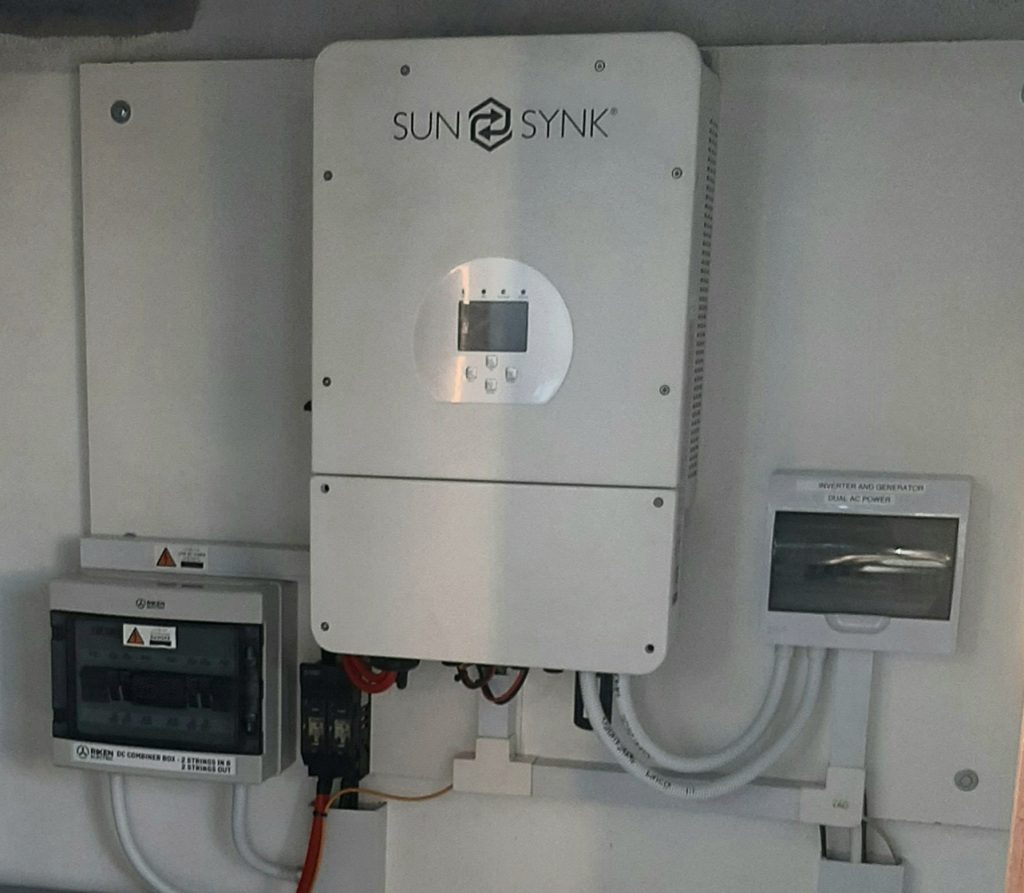
The inverter design must ensure that 100% of the loads in your home or small business can be supplied by the inverter.
Consideration must be given to which appliances could all operate simultaneously.
Being aware of the the fact that electricity is not infinite, and consciously avoiding using many appliances at the same time, could reduce the size of the inverter installed.
A completely self reliant typical home, would probably require an 8kVA inverter.